Imagine this.
Liam, a small business owner looking for an HR tool, lands on your pricing page. He hovers, checks out various price plans and features, hesitates, and then leaves without subscribing.
However, Liam visits your competitor’s pricing page. He scans each plan, picks one, and subscribes within 2 minutes, happy he got a good deal.
What happened to Liam?
It’s simple. He was won over by your competitor’s pricing psychology.
Pricing psychology is a marketing strategy that influences buyers’ perceptions of value and encourages purchasing decisions. When used strategically, it can nudge buyers to subscribe to your product by making it appear affordable, attractive, and more valuable than your competitor’s.
Ever wondered why some SaaS prices feel easier to say yes to than others? Below, I break down SaaS pricing psychology and provide practical tips for implementing it in your business. But first, there’s one thing you need to understand.
Understanding what Goes On Inside the Mind of Your Buyer
When buyers land on your pricing page, a lot of conversations take place inside their minds. One of them is about the best plan. Do they go for the Basic, Pro, or Business plan? Then they move to price. Is the product really worth $80 or less?
Buyers also try to determine the perceived value of your product. They do this by comparing the price against what they’ll be getting. And if your pricing page is filled with too many plans and features, it’ll lead to decision paralysis.
The result? Buyers feel overwhelmed and may not convert. Additionally, while on your pricing page, buyers engage in mental justification.
They ask questions like:
- Do I need XYZ product?
- Can I afford it?
- Will it solve my problem?
- Is it worth the price?
These subconscious questions help guide their purchasing decisions.
Your job as a SaaS founder is to:
- Make it easy for them to choose
- Appeal to their emotions (FOMO, urgency, etc.)
- Make them see the value of your product.
- Encourage them to subscribe and walk away feeling like they got the best deal.
The Psychological Triggers that Drive SaaS Conversions
Remember Liam, the small business owner who subscribed to your competitor’s product because of their pricing strategy? He was won over by price anchoring—a psychological pricing tactic.
Like price anchoring, there are other psychological triggers that compel buyers to hit the subscribe button.
We discuss them below:
1. Price Anchoring
Price anchoring is a psychological pricing strategy where you set a high initial price for a product or service (anchor) so that subsequent prices appear cheaper, reasonable, or attractive.
Let’s take Liam, for example.
When he landed on your competitor’s website, he saw the typical Basic, Pro, and Business plan. The Basic plan cost $99, the Pro plan, which was labeled “most popular,” cost $199, and the Business plan cost $459 (the anchor).
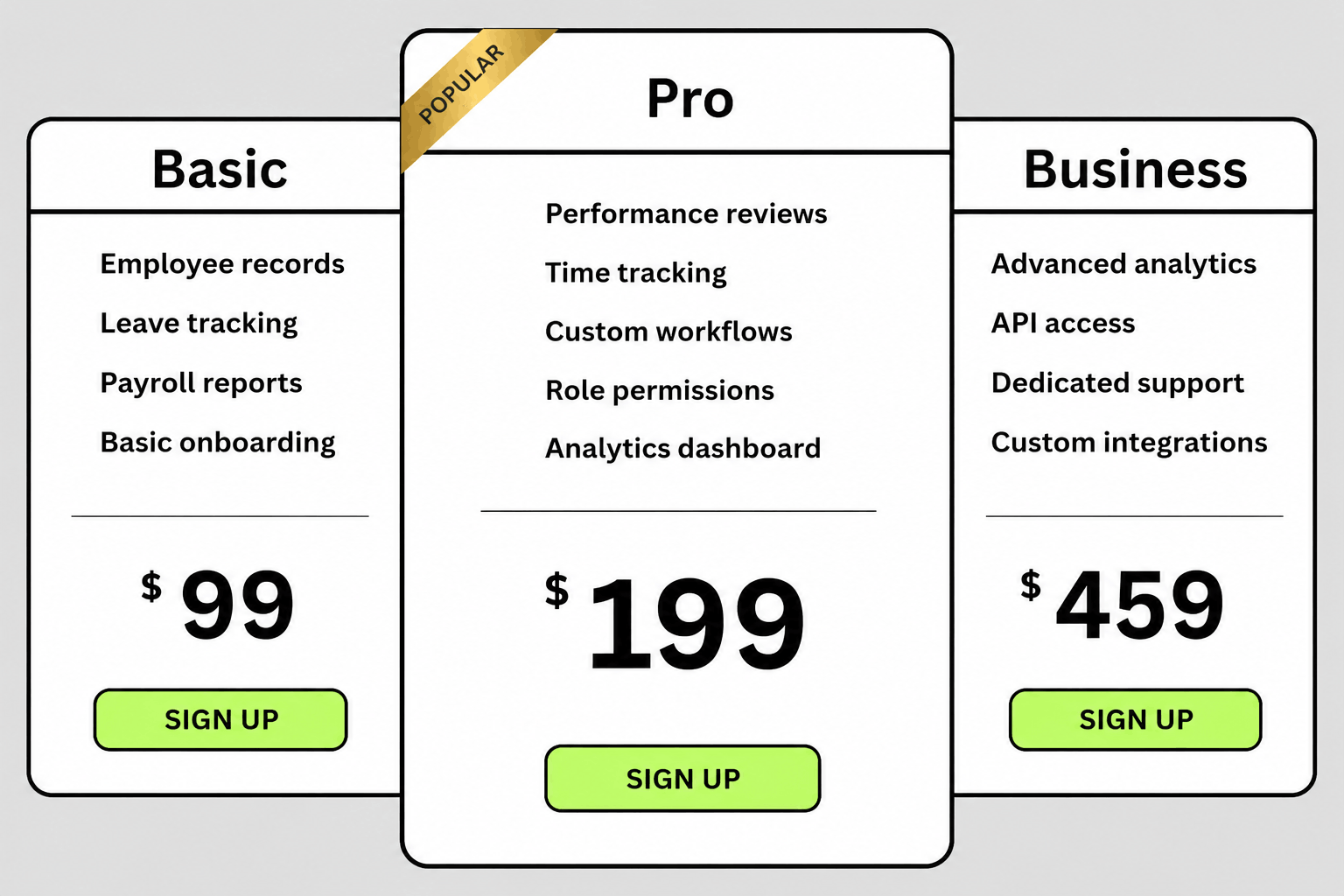
He stares at the cost of the business plan ($459), eyebrows raised as he slightly leans back from the screen.
It’s super expensive.
Shaking his head, Liam hovers his cursor over the Pro plan and then the Basic plan. They now look super attractive and cheaper compared to the business plan.
But that was the goal from the onset. Liam eventually subscribes to the Pro plan as the anchor makes it look like the best deal.
Generally, people don’t know how much a product should cost. Hence, they rely on the first price they encounter (the anchor) when making a purchasing decision. This makes subsequent low prices seem like a huge bargain.
When used strategically in your SaaS pricing strategy, the anchor price can influence how buyers perceive subsequent prices, easing them towards your preferred plan.
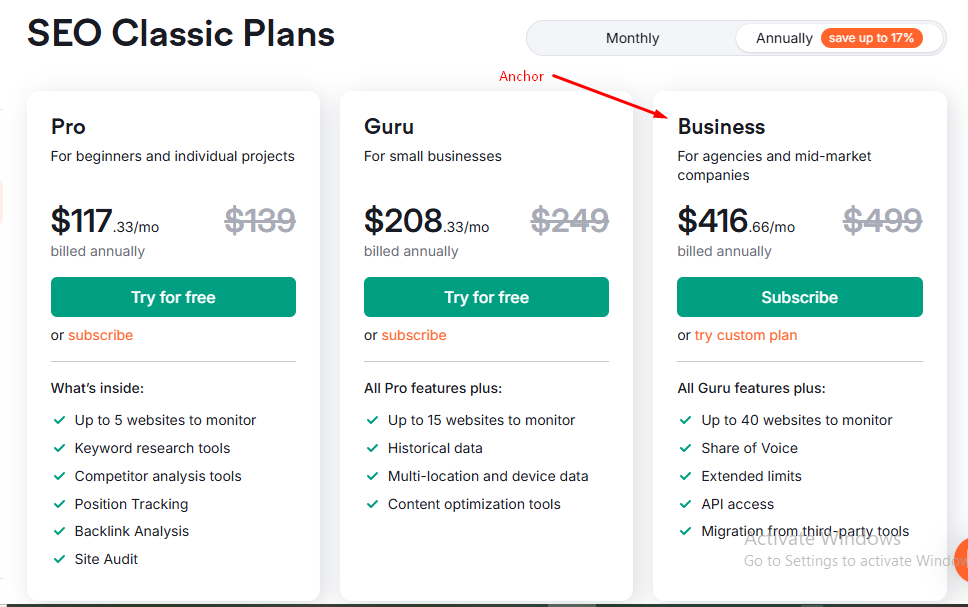
Semrush uses a price anchor for its SEO classic plans. The $416 acts as the anchor, making the Pro ($117) and Guru ($208) plans appear cheaper and more attractive.
2. Decoy Effect
The decoy effect is a pricing strategy in which a third, less attractive option (the decoy) is introduced to subtly steer customers toward a preferred alternative.
Here is the thing.
Businesses don’t expect you to buy the decoy. Its purpose is to make one of the other two options appear attractive.
Imagine this scenario: You went to a movie house to see the much-anticipated Jumanji Movie. After purchasing your movie ticket, you head to the concession stand for popcorn. There, you were offered three options: the small size, which cost $4.00, the medium size, which cost $6.50, and the largest size, which cost $7.00.
You stared at each option attentively, eyes focused on the prices while engaging in a little mind chatter on the best option.
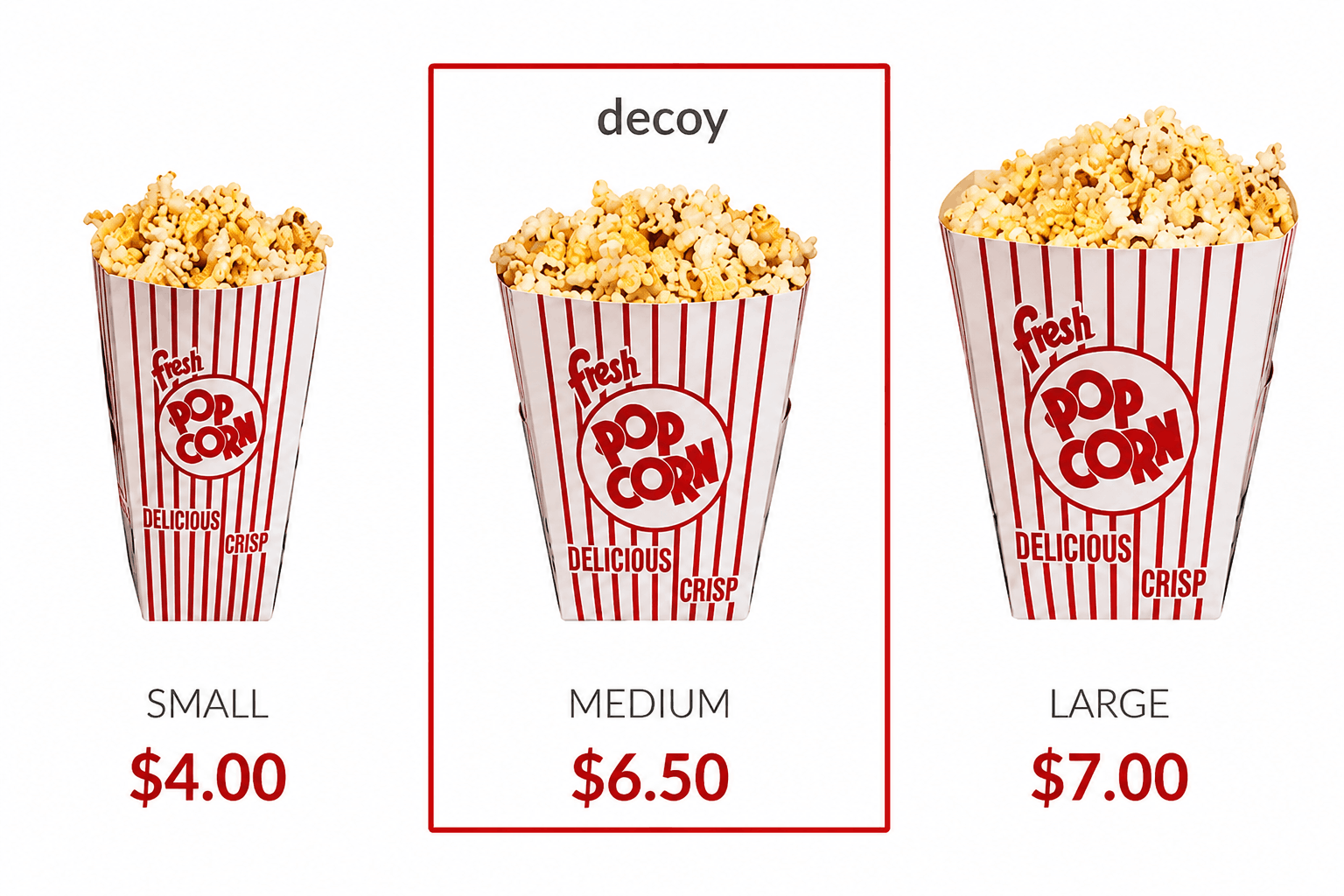
At $4.00, the small size seems cheap compared to other options. But it might get finished halfway into the movie. The medium size, meanwhile, costs $6.50, and it seems like the perfect pick.
But why pay $6.50 for popcorn when you can pay $7.00 for the large? After all, it’s just a difference of 50 cents. You eventually pay $7.00 for the large size and walk away with a smirk, feeling like you got the best value for money.
In that scenario, the $6.50 popcorn is the decoy, designed to make the $7.00 option appear like a bargain. The decoy effect does more than guide customers’ choice. It also makes it appear logical and justifiable.
In the instance above, choosing the large size seems logical and justifiable, as it offers better value for money than the medium size and costs just 50 cents more.
When incorporated into your SaaS pricing strategy, the decoy effect can boost sales of your preferred plan, thereby increasing average revenue per user. In fact, a customer support platform saw a 21% increase in overall revenue per user after implementing the pricing strategy.
3. Loss Aversion
Loss aversion is a cognitive bias in which the pain people feel from losing something is greater than the pleasure they experience from gaining something of the same value. This encourages them to focus more on avoiding losses than on making gains.
For instance, you would rather avoid losing $10,000 even if you stand a chance to win $20,000. Why? A study in psychological science answers that.
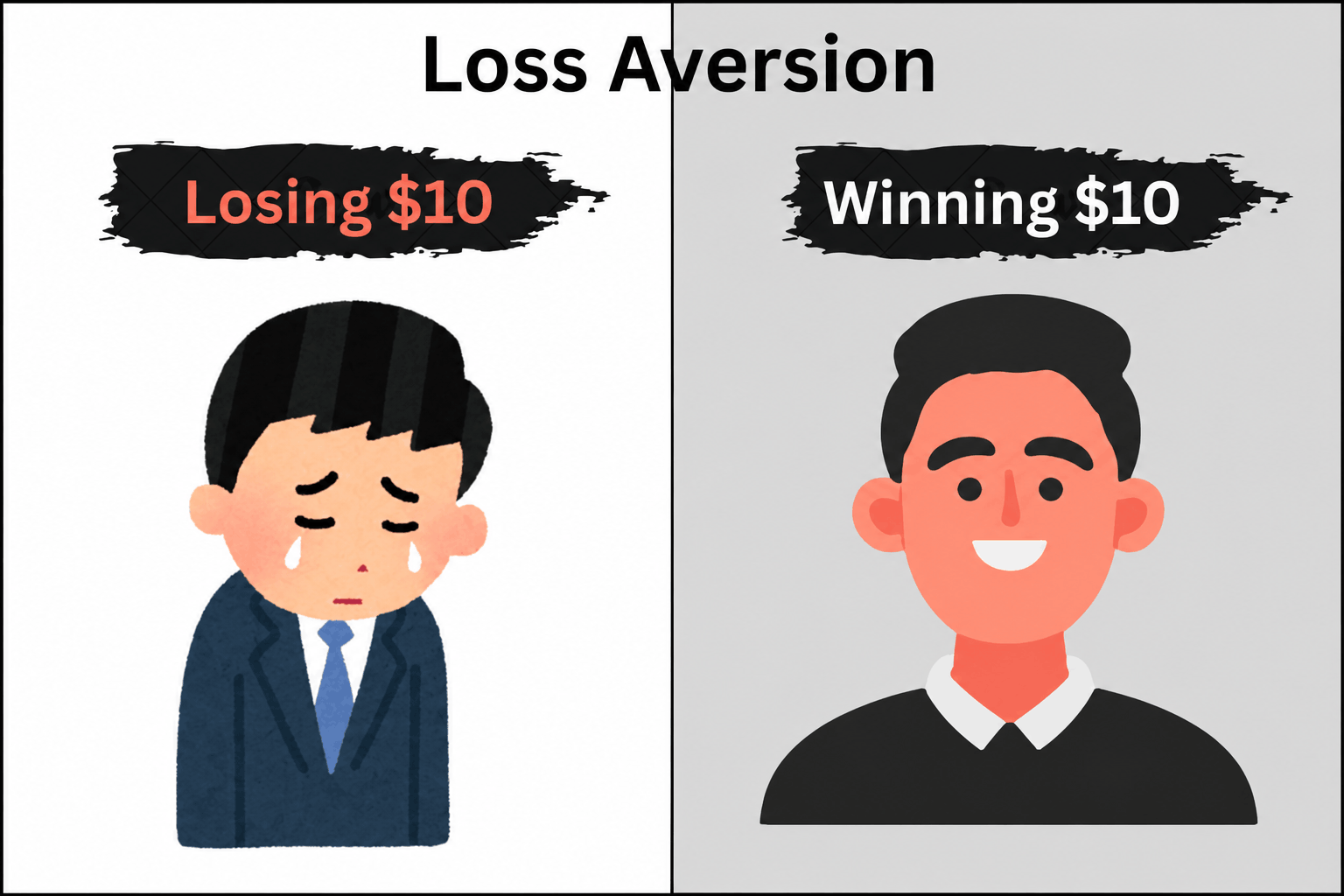
It suggests that negative experiences activate stronger emotional responses than positive ones. This leads people to focus more on avoiding losses than seeking gains.
In other words, the pain of losing $10,000 is worse than the pleasure experienced when you gain $20,000. You can apply loss aversion in your SaaS pricing strategy to influence customers’ purchasing decisions.
Here is how:
Offer a free trial with premium features
Offer users free trials with premium features. When it ends, show them what they lose if they don’t upgrade.
Once users become familiar with your product’s features, it’s hard to let go; they’ll be itching to upgrade at the end of their free trial.
Additionally, when people use your product during the free trial, they develop a sense of ownership. This makes it hard to drop the product after the free trial ends.
Highlight potential loss
Want to encourage users to choose annual billing? Show them what they’ll lose if they don’t. Include messaging like: “Save 40% with annual billing. Don’t lose $170 yearly.”
This’ll trigger loss aversion, encouraging them to consider the annual billing option. Additionally, frame your product benefits so they highlight not just what they’ll gain, but also what they’ll avoid losing.
To do that, use messaging like: “Businesses without HR analytic software risk payroll errors, resulting in a 30% increase in onboarding costs.” It’s more effective in driving conversion than messaging like “Our HR analytic software helps you save 30% in onboarding costs”
4. Social Proof
Social proof is a psychological phenomenon whereby people copy others’ actions to guide their decisions, especially in moments of uncertainty.
Imagine you want to buy an ergonomic chair for your workstation. On the ecommerce site, you see 4 attractive options. Unsure of which to choose, you look at their reviews.
The first has 3k reviews and an impressive 4.8 rating. The second? 800 reviews and a 3.5 rating. While the third has zero reviews.
Chances are you’ll go for the first chair. Why? Because 3,000 people chose it, it must be a good choice.
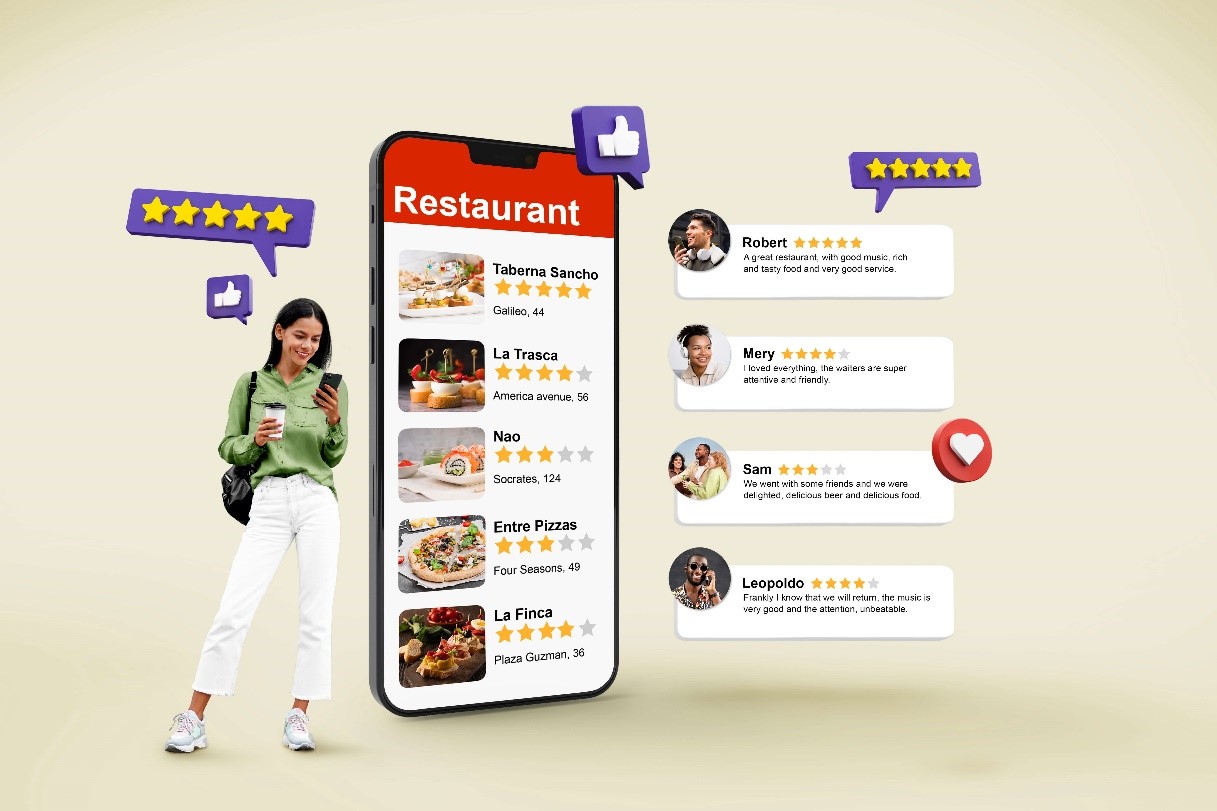
When making a buying decision—especially one involving uncertainty—people often rely on others’ actions. This is why incorporating social proof in your pricing page is crucial.
According to statistics, 92% of business-to-business (B2B) buyers are more likely to purchase after reading a trusted review, and showcasing five product reviews can boost conversion rates by 270% compared to having none.
In fact, 90% of software buyers are influenced by social proof during the consideration stage.
So, how do you implement social proof in your SaaS pricing strategy?
Adding the most popular badge.
Customers develop decision paralysis when presented with multiple subscription plans. This can lead to frustration or, worse, cause them to abandon the purchase.
Adding the “most popular” badge makes the selection process easy and less mentally exhausting. Because it shows that the plan in question is in high demand, thus a solid choice.
Include customer number
When unsure of a purchasing decision, people often look at the actions of others to guide their next step. In other words, if a customer lands on your pricing page and is undecided about your product, they’ll check if others are buying it.
Including messaging like “Join 50,000 startups managing their marketing and sales using our all-in-one tool” Is proof that your product is being used and loved by others. This helps build trust and credibility, thereby increasing conversion rates.
Include testimonials
Including testimonials is another way to implement social proof in your pricing strategy. Imagine an undecided business owner reading multiple heartfelt user testimonials about how your product solved various lead-generation challenges.
That’s enough confirmation that:
✔ Your product is valuable.
✔ Users are happy with your product.
✔ Your product is trusted by real customers.
✔ Your product solves problems and delivers real results.
While text-based user testimonials are common and convincing, video testimonials are rare and persuasive. Yes, getting video testimonials from users can be challenging. However, the ROI makes it worth the effort.
According to a Wyzowl survey, 77% of people who have watched a brand’s testimonial video say it played a role in convincing them to buy the brand’s product or service.
1-2 minutes is the ideal benchmark for video testimonials. It’s short and lets customers convey their message more effectively
5. Simplicity Bias
Simplicity bias is the tendency for people to gravitate toward things that are easy to understand, even if the more complex option might be the better choice.
Regarding pricing, it explains that customers may prefer simple pricing plans to more complex ones, even if the latter are less expensive.
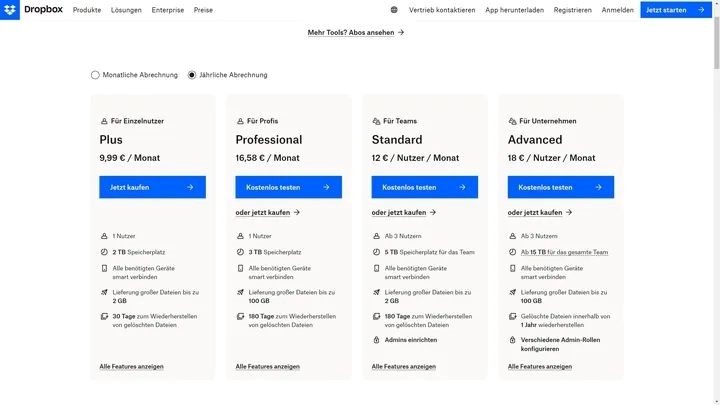
As a SaaS founder, it’s common to want to display 5-7 subscription plans that cater to your customers’ needs and budgets. While this looks good on paper, it could lead to decision fatigue (a state of mental exhaustion when faced with multiple hard choices).
Less is more.
Reducing customers’ choices can greatly reduce their anxiety. So, how do you implement simplicity bias in your SaaS pricing strategy?
First off, limit the number of pricing plans. Aim for 3 to 4 plans, aligned with different customer needs. Additionally, use price anchoring to guide customer choices. To do that, add an expensive premium plan to make others look reasonable and affordable.
You can also add social proof to boost trust and credibility, thus making it easy for customers to make a purchase decision. But remember, you need to build customers’ trust for this SaaS pricing psychology to work effectively.
Here’s how.
How to Build Customers’ Trust?
Trust is what makes customers believe that the testimonials, reviews, and “most popular” badge on your pricing page are genuine.
Without it, your pricing strategies may come across as salesy, pushy, or worse, manipulative. This’ll cause customers to look elsewhere.
Here is how to build customers’ trust:
1. Be transparent with your pricing
Transparent pricing is crucial to gaining customers’ trust and building stronger relationships. A survey from Label Insights found that 94% of customers prefer brands that practice transparency.
What this means is most customers prefer brands that are open and honest, especially with their pricing.
To adopt a transparent pricing strategy, list your prices in a way your customers can easily understand (No confusing terms or charges).
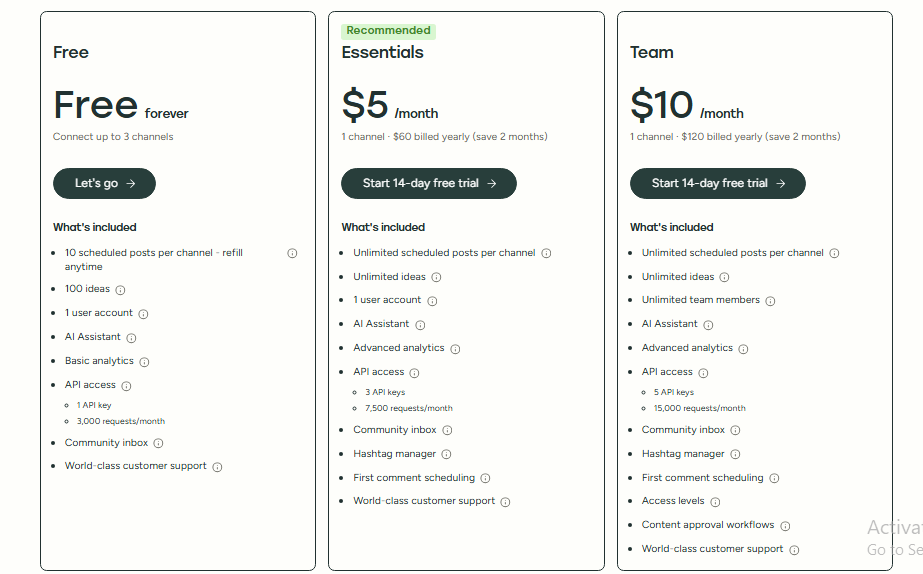
If you use tiered pricing, list what each plan includes—the number of users, features, storage, support level, etc.
Additionally, don’t forget to display all pricing components. It should include taxes, optional add-ons, recurring fees, and other fees.
You should also avoid hidden fees by including all fees (set-up, support, customization, additional storage) upfront. Doing so makes it easy for customers to compare prices, make informed decisions, and budget accurately (accordingly).
2. Honest feature comparison
Do you offer different subscription plans? Chances are you may want to exaggerate features to make your preferred plan appear more appealing. Or hide limitations to make it appear perfect.
The truth?
You risk losing customers and damaging your brand reputation when they find out you lied. The goal of feature comparison isn’t to hype your product like the future depended on it. Or overwhelm users with technical jargon.
The goal is to provide an honest feature comparison so customers understand the differences between the plans. And choose the one that best serves their needs.
3. Testimonials and reviews near pricing tables
Customers visit your pricing page with doubts and uncertainties. Testimonials and reviews help quell them, as they signal that others have had a good experience with your product.
They also help build trust and credibility.
A recent study by Trustmark found that websites with authentic customer reviews achieve up to 270% higher conversion rates than those without.
Make sure to add real customer testimonials and reviews near pricing tables. This helps to reduce friction in decision-making, encouraging quick conversion.
SaaS Brands Implementing Pricing Psychology Right
Below are real-world examples of popular SaaS brands that implemented the pricing psychology the right way:
1. HubSpot
The AI-powered customer platform uses price anchoring in its pricing pages.
Here is how.
They introduce two plans: professional and enterprise. The enterprise plan is priced higher ($4,700) and serves as the anchor.
This makes the professional plan ($1,300) appear more attractive by comparison.
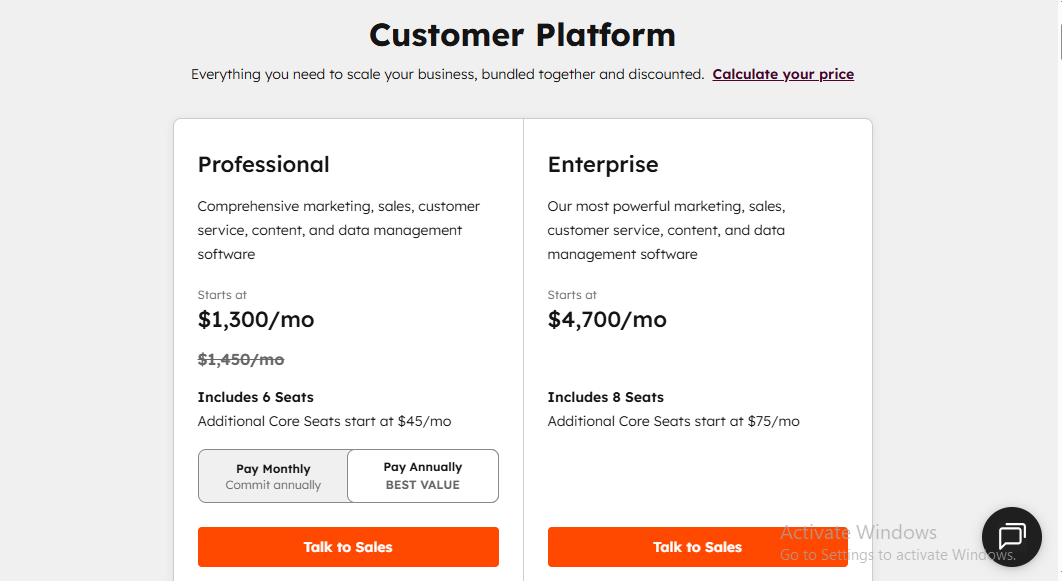
Hubspot doesn’t expect to make sales on the enterprise plan. Its purpose is to nudge customers towards the lower-tier plan by making it appear like a better deal by comparison.
2. WIX
WIX, a popular website builder, applies simplicity bias in its pricing page. They do this by using a minimalist layout with 4 plans, making it easy for customers to make purchasing decisions.
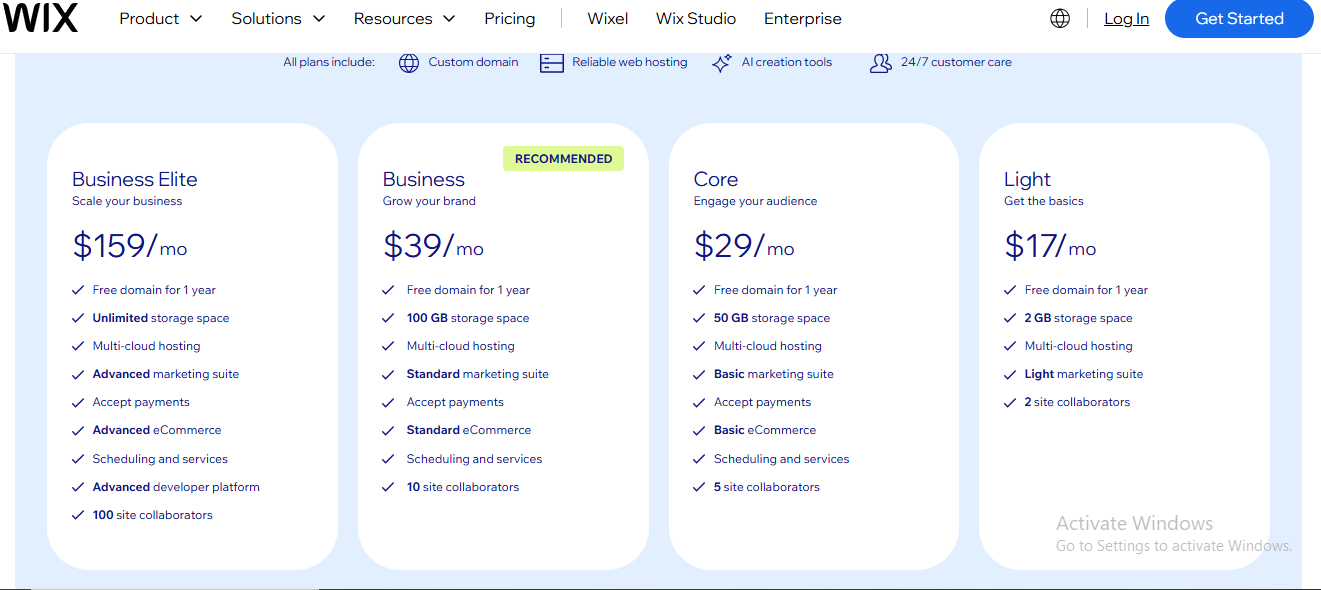
Wix also uses price anchoring. And they do it strategically.
They introduce the Business Elite plan on the left side of the page, ensuring that it’s the first price customers see (humans read from left to right).
The plan, priced higher than others, serves as an anchor. This makes the business, core, and light plans appear attractive in comparison.
3. OptiMonster
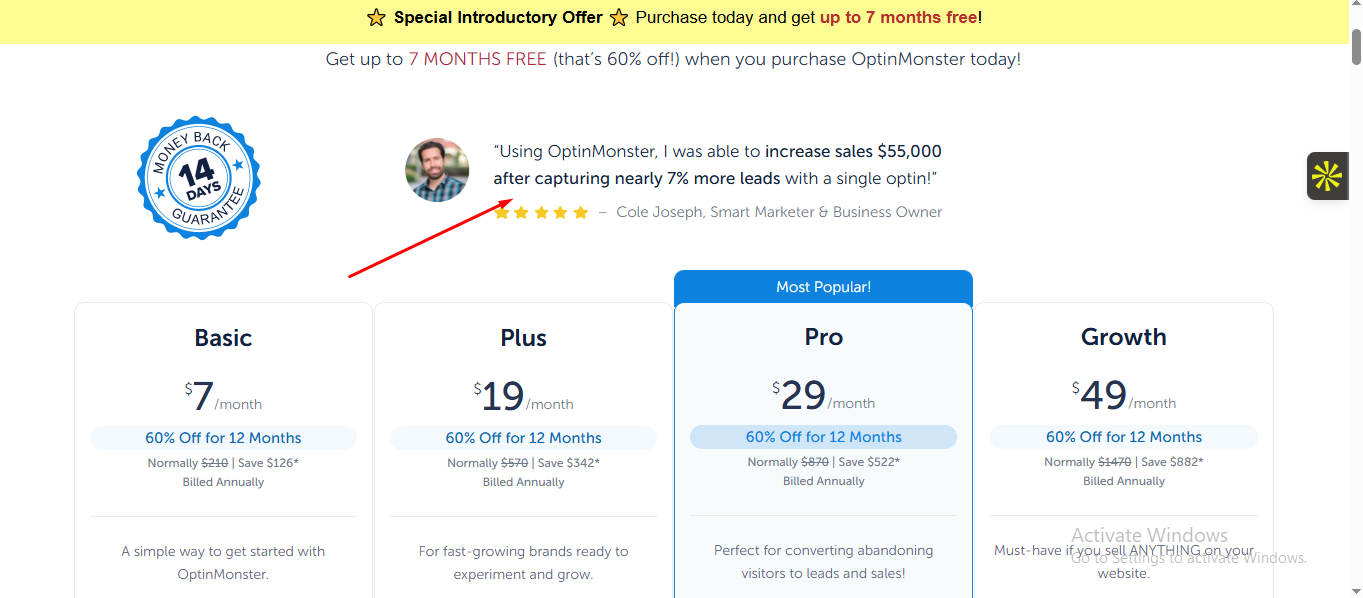
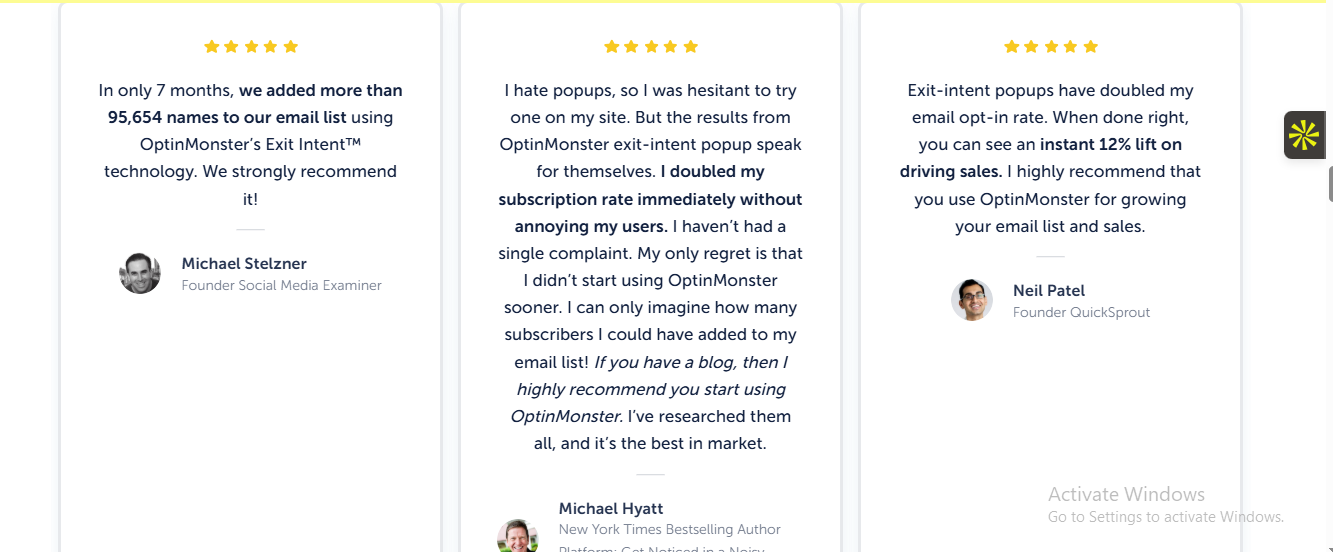
OptiMonster, a lead-generation software, uses testimonials (a form of social proof) on its pricing page. While most SaaS brands place them below their pricing table, OptiMonster add theirs above and below.
This helps build trust quickly with customers as they analyze each plan to make a buying decision.
OptiMonster also does something I love: They included a “compare plan feature” button (that expands and retracts when clicked) for customers who’d like to compare plan features. This helps simplify the pricing page, ensuring that customers aren’t overwhelmed with too much information.
Additionally, OptiMonster uses price anchoring. They do this by pricing the growth plan higher (49$) so that other plans (Pro: $29, Plus: $19, Basic: $7) seem more affordable in comparison.
4. Zoho CRM
Zoho CRM taps into loss aversion to persuade customers to subscribe to their product after the end of the free trial.
Here is how they do it. They offer users a 14-day free trial with premium features.
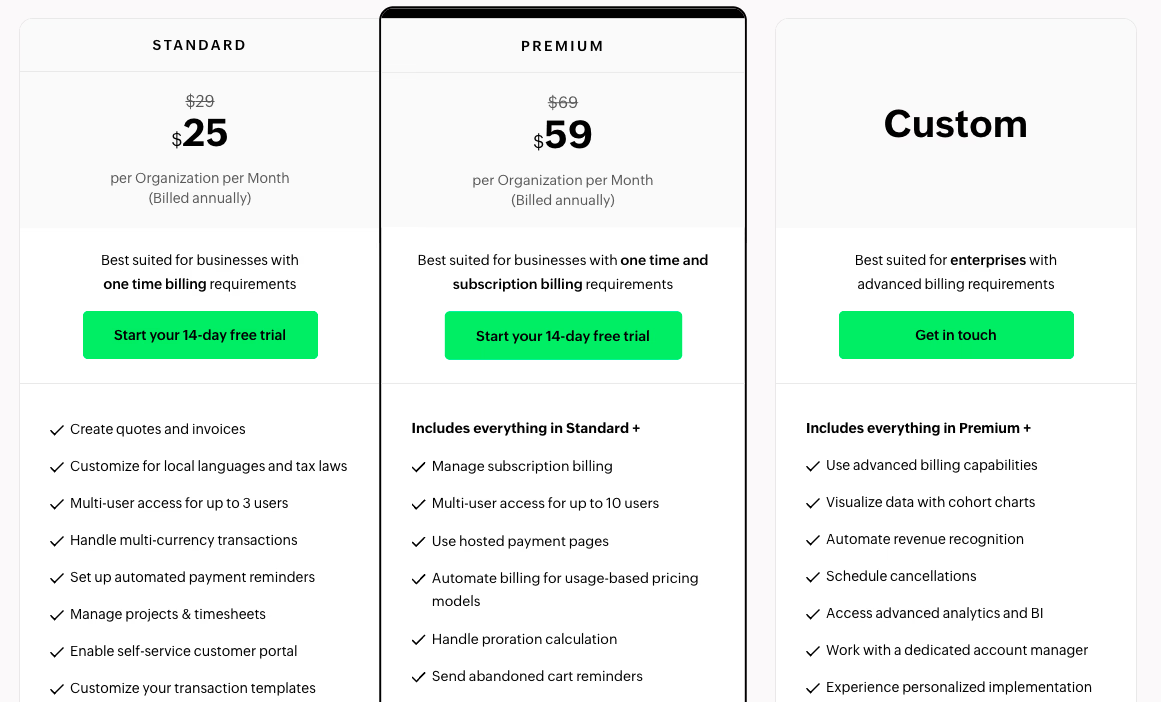
As soon as the free trial is about to end, customers are reminded of the premium features they’ll lose if they don’t subscribe.
Then the fear of loss kicks in. Remember, customers fear loss more than gain. The fear of losing the features they enjoyed encourages them to subscribe.
Moreover, when customers start using a product’s premium features, they develop a sense of ownership. This makes it hard for them to give it up.
Pricing Mistakes SaaS Brands Make
While some SaaS brands get their pricing right, others get it wrong and wonder why their pricing page is getting significant traffic yet no sales.
To avoid the latter, watch out for these mistakes:
1. Too many tiers
Imagine scrolling through 20 movie recommendations on Netflix. You read each synopsis but somehow can’t settle on which movie to watch.
You eventually get exhausted and frustrated from scrolling and mulling over options. So you exit the app or settle to rewatch an old favorite.
That is exactly what your customers experience when they face many tiers on your pricing page. They get overwhelmed with choices. This mental burden may cause them to postpone or abandon subscribing to your product entirely.
So, how do you avoid this scenario?
By using fewer tiers. 3 tiers, including an enterprise plan, are common among successful SaaS brands like Zoom, Slack, Wix, etc. Anything more than that and you risk your customers experiencing choice overload.
2. Overemphasis on discounts
Using discounts is a good way to attract new customers, boost sales, and encourage repeat business, especially in a competitive market.
But, here’s the thing.
Relying heavily on discounts may devalue your product. This is because customers associate a higher price with quality and vice versa.
Moreover, when you use discounts frequently, people assume that:
- Your product may be low-quality
- Your product wasn’t worth the original price.
- You are having difficulty attracting customers.
Yes, discounts are still an important pricing strategy. Use them reasonably and strategically, especially at friction points.
For instance, discounts are best used:
- At the end of a free trial
- To encourage annual billing
- To win back churned or inactive customers
3. Forgetting to communicate value before price
It doesn’t matter which pricing psychology you use; failing to communicate your product’s value upfront can force your customers to question the price.
Here’s how to prevent that: Show the problem your product solves and the outcome it delivers. For instance, instead of saying, “Our performance management software helps improve employee engagement,”
you could say: “Companies using our performance HR software report up to 12% higher engagement scores in 4 months of use”
Quantify your product’s value so customers understand its real impact. Then use social proof (testimonials or reviews) to back up your claim.
Did you know? A study by Simon-Kucher & Partners discovered that companies that articulate their value proposition before discussing pricing achieve 20% better outcomes in pricing conversations.
4. Ignoring user behavior data
Once on your pricing page, you expect prospects to convert, right? Most of the time, they don’t. And it could be because:
- Your product isn’t worth the price
- Your pricing is confusing and complex
- They don’t trust your brand
- Poor user experience (UX).
The truth?
It’s difficult to know what is causing prospects not to convert if you neglect user behavior data (clicks, page views, scroll depth, rage clicks, etc.)
It’s a no-brainer.
The reasons prospects hesitate lie in the actions they take on your pricing page. For instance, tracking user behavior helps you identify rage clicks (repeated clicks or taps on an element on a website or app due to frustration), which signals poor user experience. While prospects hovering around multiple plans can make your pricing confusing or complex.
Tracking user behavior data gives you a clear insight into why prospects are hesitating, allowing you to make informed tweaks where necessary.
You can track user behavior using website heatmaps and analytics tools like Hotjar or Crazy Egg. They help you visualize how users interact with your website.
How to Apply Pricing Psychology to your SaaS?
Now that you understand the importance of pricing psychology, here is how to apply it to your pricing strategy.
1. Audit your current pricing page
When auditing your pricing page, the first question you should ask yourself is: Are there any points of friction?
Friction is anything that slows down the customer or hinders them from buying.
Here are some examples and how to fix them:
| Friction | How to Fix It |
|---|---|
| Hidden costs | Make pricing transparent. |
| Too many features | Prioritize the most important features for each plan. Use a drop-down or expandable section to hide secondary features. |
| No trust signals | Include social proof such as testimonials, reviews, customer logos, user counts, or case studies. |
| Price shock | Introduce price anchoring to make higher-priced plans feel more reasonable. |
| Multiple pricing plans | Limit choices to 3–4 pricing tiers to reduce decision fatigue. |
Next, ask yourself: is your pricing page communicating the value of your product? If it takes a new visitor more than 15 seconds to understand what they get after subscribing, it means you aren’t communicating your value clearly.
To fix that, replace features with benefits. For instance, instead of saying: “100 GB storage space” (feature), say “Store large files and media without worrying about running out of space” (benefit).
While features explain what a product does, benefits reveal how it can positively impact the customer. You should also use simple, relatable language to communicate your product value. It allows customers to connect with your message, increasing their chances of converting.
2. Identify emotional barriers
According to popular American Salesman, Zig Ziglar, “People don’t buy for logical reasons. They buy for emotional reasons.” In other words, emotions drive purchasing decisions. But they can hinder it, too.
For instance, the fear of overpaying can force customers to abandon a purchase and look elsewhere. To avoid this, show customers potential ROI, value, and how much they’ll save from using your product.
Confusion and doubts can also cause customers to hesitate. You can address these by simplifying pricing, prioritizing benefits, and adding social proof (testimonials, reviews, certificates, and trust badges, etc.) to boost credibility.
3. Choose 2 principles to test first
Now that you know some pricing psychology strategies, you might be eager to apply them all. But before doing that, test the waters.
Choose 2 pricing strategies to try out. That way, it’s easy to spot which your audience relates to, which drove results, and which didn’t. From there, you can double down on what’s working.
Not sure of which to test first? Price anchoring and social proof (by highlighting the most popular plan) are good options to try. They are easy to implement, low-risk, and can boost conversions.
4. Run A/B tests and measure behavioral shifts
After choosing 2 principles to try out, what next?
You run an A/B test, which is a better approach than guessing. An A/B test is a method of showing 2 different versions of something to see which performs better. You can start by testing the following pricing page elements, one at a time:
- CTA
- Copy
- Headline
- Anchor price
- Pricing layout (3 plans, 4 plans, etc.)
- Social proofs (reviews, testimonials, trust badges)
This helps identify the versions users respond to, allowing you to make data-driven decisions.
Next, you want to measure behavioral changes. Are customers hovering on a particular plan? It signifies high customer attention and interest.
On the other hand, if more free users are becoming paying customers, it’s a sign that you provided clear value. What about time spent on the pricing page? More time can signify intent or confusion.
Monitor behavioral changes after A/B tests, double down on what’s driving positive business results, and modify what’s not.
The Mind Buys Before the Wallet
Before customers subscribe to your product, a lot of thought goes on in their subconscious. Is your product worth the price? Will it solve their problem? Can they trust your company? Is your Pro plan right for them?
Implementing pricing psychology like simplicity bias, loss aversion, and price anchoring is how you influence their subconscious, driving conversions.
These pricing strategies help guide customers’ decisions and make prices feel more attractive. Review your pricing strategy today and apply one pricing psychology, combining it with social proof for maximum effect.